Tag: SLCN

5min PPT: #NAPLICResources (9)

5min PPT: #DLD day (2)

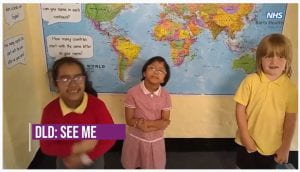
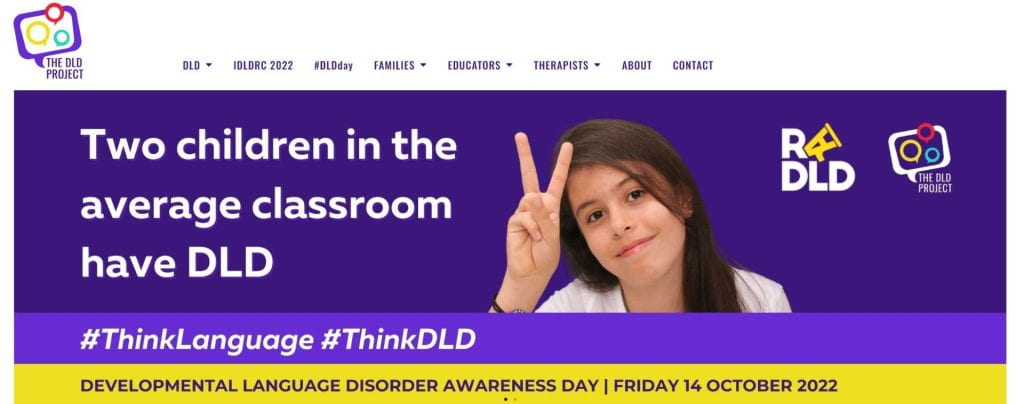
This year’s DLD awareness day is 14th October 2022. We have made a short PowerPoint for our ‘5 minutes for inclusion‘ series to mark it .

Click above to view our PowerPoint. The second slide is a link to great 2 minute video

This a lovely video made by students and staff at Globe Language Resource Base in 2020. Still well worth a watch!

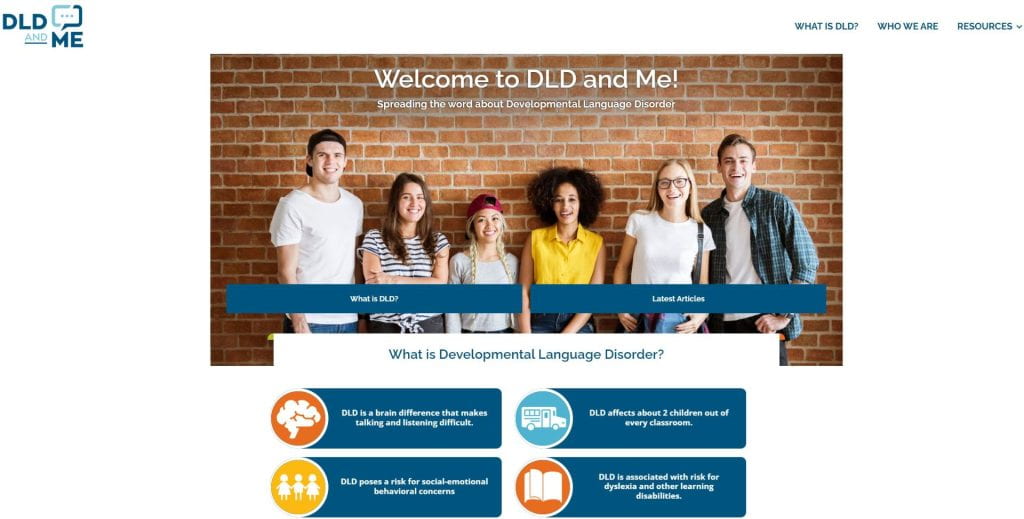
To raise awareness in YOUR setting check out the resources and information at the links below:

https://dldandme.org/

We are running parent support groups for parents whose child has a recent diagnosis of DLD with Barts NHS Speech Therapists.

If you would like more information or training in DLD or any other area of SLCN or literacy difficulties please email linda.hall@towerhamlets.gov.uk

Make sure that you’ve checked out the first PowerPoint in out 5-minutes-for-inclusion series.

November 24th is No Pens Wednesday

What is No Pens Wednesday?*

It is a national day dedicated to speaking and understanding language which takes place in schools and settings annually. Click on the picture above, or link below to sign up and get lots of ideas to try in your class. There are ideas for Early Years, Primary and Secondary.

Why take part?

Speaking and understanding language are often overlooked in the UK education system in comparison to written language skills. However, as with literacy and numeracy, schools can play a crucial role in developing children’s skills in this important area.

No Pens Day Wednesday puts speaking and understanding language in the spotlight. Through a day of fun and engaging activities, schools and
settings can:

Raise awareness of the importance of speaking and understanding skills with staff, children and families.

Improve children and young people’s speaking and understanding skills and increase their engagement in lessons.

Support their curriculum’s focus on speaking and understanding language, and develop staff skills and confidence in teaching speaking and understanding skills.

Identify children who may have speech, language and communication needs and provide additional support.

Why is it so important?

Language levels at age two predict reading, writing and maths ability when children start school.

As many as 50% of children in some areas of social disadvantage start school with delayed language. Without early support, these children may struggle to catch up with their peers.

In Primary School:

Children who have difficulties speaking and understanding language are at a higher risk of behavioural, social and emotional difficulties in childhood and through adolescence.

More than 90% of children who have persistent language difficulties at age 5 have literacy difficulties at age 15.

In Secondary School: 

Good communication skills are rated as the most important employability skills needed for young people entering their first job – from a survey of schools, employers and politicians.

Up to 88% of long-term unemployed young men may have speech, language and communication needs.

*taken from the ICAN guide to the day

(more…)

#ThinkLanguage #ThinkDLD

15th October is Developmental Language Disorder Awareness Day


Find out more at RADLD – click the link below and share with your colleagues

https://towerhamletssls.edublogs.org/files/2021/10/3-DLD--Tree-v2-1.pdf


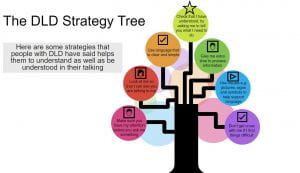
Download the DLD Strategy Tree to print out in your setting. Click the picture above

3a-DLD123-Info-sheet_HR (1)


DLD 1 Difficulties Talking and/or Understanding

Developmental Language Disorder is a diagnosis given when a child or adult has difficulties talking and/or understanding language

  • Involves difficulties with spoken language
  • Affects children and persists into adulthood
  • creates obstacles to communication at school, work and in everyday life
  • has no known cause although it may run in families

DLD 2 Hidden But Common

DLD is hidden and affects approximately 2 children in every classroom impacting on literacy, learning, friendships and emotional well-being

  • Can be missed, misdiagnosed or misinterpreted as poor behavior, poor listening or inattention
  • Was found in 7.5% of 4-5 year olds in a recent study
  • Affects a child’s ability to learn at school because learning is mainly through language
  • Affects reading or writing and is often linked with dyslexia
  • Can be socially isolating; joining in with conversations and activities with peers can be harder, there is an increased vulnerability to bullying
  • Increases the risk of lower academic achievement
  • Can be associated with behavioral and/or mental health problems, unemployment and economic disadvantage

DLD 3 Support Can Make A Real Difference

Support from professionals, including speech and language therapists and teachers, can make a real difference

  • It is important that DLD is identified so individuals can be adequately supported
  • Speech and language therapists and specialist teachers  can help those with DLD to develop skills and strategies, and to understand their difficulties and their strengths
  • DLD can be a long term difficulty thus adults with DLD may also need support and adjustments in the work place
  • Individuals with DLD are sociable and with appropriate support can have satisfying lives, with friendships, families, contributing to their community


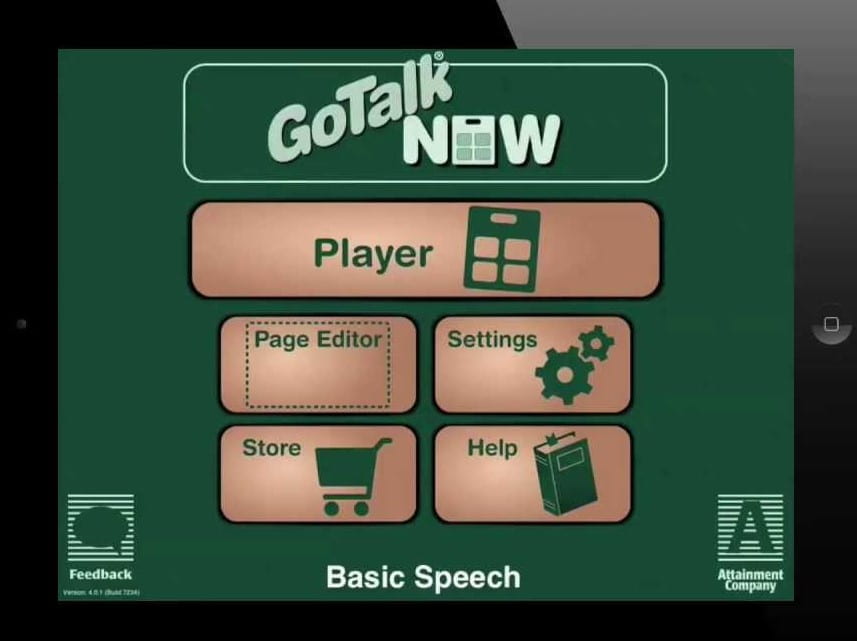
Go Talk Now (lite) an easy start for AAC

What is it?

One of the simplest electronic communication aids – so-called augmentative and alternative communication (AAC) – is the Go Talk. A physical device with a set number of squares in a grid that when pressed played a recorded message. They come in various sizes, and each can be loaded with a number of set ups which are then associated with an overlay to guide the user.

It is a system that has now been made into an iPad app which has retained much of that simplicity.

To get you started there is a no-cost ‘Lite’ version which is restricted to six pages, but within that these can include an on-screen keyboard, grids to build complete sentences, or single word responses. The grids can range in size from 1 to 36 cells, any and each of which can contain both text and images, or just either, and the option to speak either the words shown, or a recorded sentence, as well as switching to another page.
This flexibility means it can be used by those who can read, and by those who need images or symbols, and everyone in between.

Who is it for?

Anyone who needs a voice. This might be a child or young person with an autistic spectrum condition who is non-verbal, or else someone with a speech and language condition that makes their words indistinct, or even a learner with profound and multiple learning difficulties who is given two options to make a choice for what they want to drink.

It could be used by an individual, or shared and passed around a group, perhaps to build new vocabulary, or to rehearse language for social situations.

How do I use it?

The simplicity and flexibility of the set up mean that it can be used in myriad ways. It could be given to a learner to take everywhere to literally be their voice – whether that is in class, out in the playground, and even when they go home or go to the shops. It might also be a way for a pupil to join in a lesson. Grids with appropriate answers can be prepared so that he or she can answer teachers questions, or make choices about what is happening in the lesson, or maybe to give them options for what they want to do next.

For instance, a grid of numbers will allow them to join in  a mental maths lesson. Initial letters might help with phonics, and adjectives with descriptive writing. It is also a useful assessment tool, both for literacy itself to ascertain reading levels as they read words to complete activities, or to assess understanding of what has been learnt.

What else is there?

There are a number of great  communication apps on the  market, such as Proloquo2go, Grid Player, and Clicker Communicator, all offering similar features. What distinguishes Go Talk Now (Lite) is that it can be downloaded and installed for free, albeit limited to six pages, then quickly edited and expanded. Whilst Grid Player is also free, you need to invest in  Grid 2 to edit and create pages.

Because of its easy availability Go Talk Now is an easy point of entry into AAC.

Subscribe By Email

This form is protected by reCAPTCHA and the Google Privacy Policy and Terms of Service apply.

Skip to toolbar